

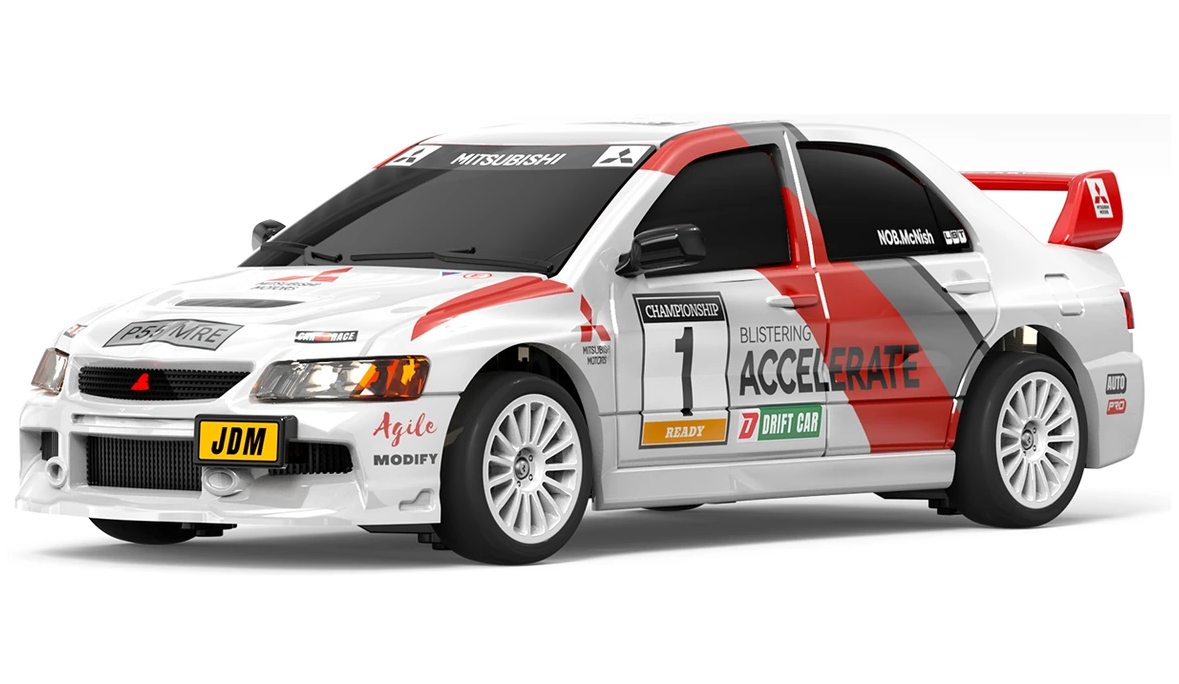
Before placing a wholesale order for a mini RC drift car, test a sample against a written specification and confirm how the supplier will support the finished order. The buying decision should cover driving behaviour, packaging, documentation, and the cost of handling problems after delivery.
For hobby stores, diecast dealers, and online sellers, a useful evaluation answers a practical question: can customers understand, use, and maintain this product with the support your business can provide? The following process helps turn a sample into evidence for an ordering decision.
Define the customer and intended use
Start with the people who will buy the car. A collector may pay close attention to body proportions and printed details. A customer trying RC for the first time may need straightforward controls and clear instructions. A hobby customer may ask about adjustments, replacement parts, and driving characteristics.
Write down the intended customer, advertised age suitability, expected selling price, and likely driving environment. If you plan to demonstrate the car on a shop counter, measure the usable space and identify a suitable surface before ordering samples. These decisions give you a consistent basis for comparing products.
Get a written specification before testing
Ask for a specification sheet tied to the exact model and version being quoted. It should identify the scale, dimensions, drivetrain, control functions, battery information, charging requirements, and box contents. Clarify whether any listed weight refers to the car, the retail pack, or the shipping carton.
A model-specific listing, such as the EVO6409 product specifications from JXC Model, provides a starting reference for this check. The listing describes a 1:64 Mitsubishi Lancer Evolution IX RC drift car. Confirm the configuration and accessories that will apply to your order in writing.
Resolve conflicting information before approving the sample. If a photograph, specification table, and quotation show different accessories or control settings, ask the supplier to issue one agreed version. Keep that document with the sample records so production and purchasing teams work from the same requirements.
Test the controls on a repeatable course
Set up a simple course on a flat surface recommended by the manufacturer, with barriers to prevent the car falling from a raised table. Mark a starting position, a straight section, and a few turns. Record the surface, tyres, battery condition, and controller settings so you can repeat the test.
Begin with slow starts and stops, then test steering in both directions. If proportional control is advertised, check whether small trigger and steering inputs produce progressive responses. Note sudden acceleration, inconsistent steering, repeated connection loss, or difficulty returning to straight travel.
Next, attempt the same turns several times. Record whether the driver can initiate a slide and regain control predictably. If adjustable assistance or speed settings are supplied, change one setting at a time and note the result. Give someone unfamiliar with the model time to try it using the instructions; record where they need help.
Use the same course and driver when comparing samples. If multiple cars will run together in your store, test that arrangement according to the manuals. A short video of the test can help the supplier investigate a problem without relying on a vague description.
Check charging and inspect the car after use
Charge the sample using the specified equipment and procedure. Record charging time, then measure usable driving time under a consistent routine. Define your stopping point, such as the low-battery indication described in the manual. Repeat the routine to see whether the results are reasonably consistent.
Ask how the battery is serviced, whether replacements are available, and who is expected to fit them. Also confirm the transmitter power requirements. These details should be clear to a customer before purchase.
Inspect the car before and after testing. Check body fit, paint and printed details, wheel alignment, loose components, and any rubbing or damage that appeared during normal operation. Photograph issues rather than relying on memory. Short sample tests can reveal problems, but they cannot establish long-term durability.
Unpack the product as a customer would
Request the intended retail packaging with the sample. Open it, check the contents against the packing list, and follow the instructions from the first step. Note anything a customer would have to guess, including pairing, charging indicators, control settings, and the recommended driving surface.
Check whether the packaging holds the car and transmitter securely and protects exposed details. Review the readability of model information, warnings, and instructions. If colours or liveries have separate stock codes, confirm that staff can identify them without opening every box.
Measure the retail box and obtain the master-carton dimensions, gross weight, and quantity. Shelf and shipping decisions need the packaged dimensions, including the transmitter and accessories.
Review the documentation for the exact product
Tell the supplier where and through which channels you intend to sell. Request the documentation relevant to that model and destination, and have the appropriate testing or compliance specialist confirm what is needed. Compare model identifiers on the documents with the quotation, sample, and packaging.
For a vehicle advertised as officially licensed, request evidence covering the product and intended territory. Clarify any restrictions affecting branded imagery, packaging, or customization. Brand authorization and product testing answer different questions; review each separately.
Record which documents are available now, which are pending, and who is responsible for supplying them. Resolve missing information before committing to production or launch dates.
Compare the complete order terms
Ask for a quotation that specifies the minimum order, quantity per carton, colour mix, packaging version, payment terms, and delivery basis. Clarify whether a small first order can include different versions and whether later replenishment follows the same conditions.
Compare quotations on a consistent basis. Alongside the product price, obtain estimates for freight, applicable import charges, inspection, packaging changes, and local handling. Confirm what the quoted delivery price includes and who pays costs outside it.
Request separate timing for samples, any approvals, production, and transport. If the model is available from stock, confirm the quantity and configuration reserved for your order. A written schedule makes it easier to plan listings and promotions around a realistic arrival date.
Agree on support and production acceptance
Before ordering, ask which parts are stocked, their prices, and how replacements are dispatched. Confirm how faulty units are reported, what evidence is required, who pays shipping, and when a repair, replacement, or credit is available. Obtain the written terms that apply to your order.
Retain an approved reference sample, photographs, and the final specification. Agree which changes require your approval and how finished goods will be checked against those records. A working demonstration unit cannot establish the condition of an entire production batch.
ASQ defines acceptance sampling as using an inspected sample from a production lot to make an acceptance decision about that lot. For an order that warrants formal inspection, agree a suitable sampling plan and defect criteria with the supplier and inspector. Checking a few demonstration units is not a substitute for that plan.
For a new supplier or unfamiliar model from a china rc car manufacturer, consider a manageable first order. Track customer questions, reported faults, support response, and actual sales before deciding on a larger reorder.
Record the decision before approving the order
Use a short evaluation record to keep outstanding questions visible. Set the requirements before testing, then attach photographs, observations, and written supplier responses.
| Area | Evidence to retain |
| Specification | Agreed model version, features, accessories, and packing details |
| Driving performance | Course conditions, control observations, and test video |
| Battery and construction | Charging and runtime records, plus before-and-after photographs |
| Customer setup | Box-content check and notes from following the instructions |
| Documents | Model-matched records and confirmation of outstanding requirements |
| Order and support | Quotation, schedule, spare-parts information, and remedy terms |
Approve the order when the sample meets your requirements and the supplier has resolved the important commercial and documentation questions. Keep the agreed specification as the reference for production and delivery checks. This gives your business a clear basis for accepting stock, handling customer questions, and deciding whether the model deserves a repeat order.


